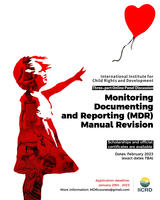
The IICRD is moving to a Leadership Advisory group. This group will work on fundraising, supporting the board, onboarding new associates, communications, administrative support, and more. Please email info@iicrd.org if you would like to get involved!
It is with heavy hearts that we acknowledge the:
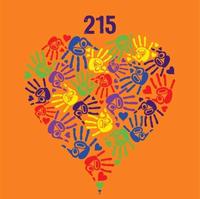
-215 children who never came home
-The 430 parents whose lives were forever changed
-The 860 grandparents left to wonder and
-The generations of siblings, aunties, and uncles still living with…
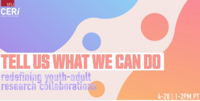
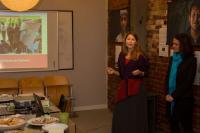
On 4-28, join IICRD's Laura Wright and Natasha Blanchet-Cohen (and others) @sfuCERi for “Tell us what we can do”: redefining roles in youth-adult research collabora
Are you a passionate advocate for child protection, child and family welfare, and children’s rights in a variety of fields? Do you bring experience in working with children and youth at a professional or policy level?...
The International Institute for Child Rights and Development (IICRD), a non-profit organization affiliated with Royal Roads University, seeks a dynamic, detail-oriented Administrative Assistant for a part-time contract position.
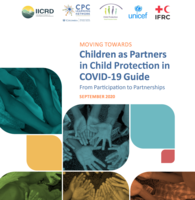
The Child Protection Area of Responsibility (CP AoR), Care and Protection of Children (CPC) Learning Network, International Institute for Child Rights and Development (IICRD), International Federation of Red Cross and Red Crescent Societies (IFRC), and UNICEF are excited to share the new ‘
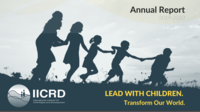
Wrapping up the year, the International Institute for Child Rights and Development held its Annual General Meeting on October 28th, 2020 to share highlights, lessons, and impacts from the 2019-2020 fiscal year.
IICRD's Stuart Hart will be featured in a special webinar on November 9th with guest editors Yanghee Lee and Jaap Doek to give an overview of an upcoming special issue of Child Abuse and Neglect which commemorates the 30th anniversary of t
The Child Protection Area of Responsibility (CP AoR) and the Care and Protection of Children (CPC) Learning Network at Columbia University invite you to join us for a webinar on engaging children as partners and leaders in child protection durin
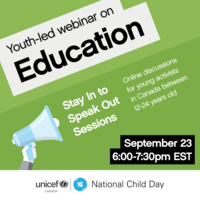
Has back-to-school been a #SafeSeptember or #UnsafeSeptember for you? Join UNICEF's @OneYouthCanada and young people from across Canada to #StayInToSpeakOut on your experience and discuss how we can improve education after #COVID19.
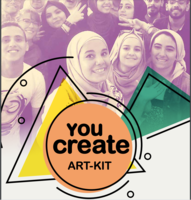
IICRD teams up with Terre des hommes (Tdh) to launch new E-Learning course and manual through YouCreate, a youth-led, arts-based Participatory Action Research project for wellbeing and social change.
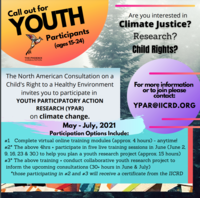
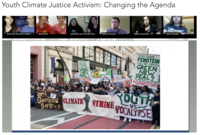
No group is more vulnerable to environmental harm than children and young people. And no group will be more affected by the unravelling of core elements of the natural environment on which all life depends.
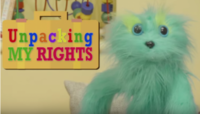
A video released in celebration of World Refugee Day 2020 helps children new to Canada to understand their rights, while teaching their friends how they can welcome refugees.
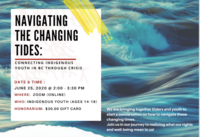
Indigenous youth in British Columbia are facing many interconnected tides: the COVID-19 pandemic, racial discrimination, economic insecurity, and an environmental emergency - leaving young people’s health and wellbeing in the balance.
A child has many people and factors influencing their development and wellbeing. How do you evaluate projects focused on supporting child protection interventions? What is working well and what can be learned to apply elsewhere?
Deadline Extended!
Giggles, a friend of the International Institute for Child Rights and Development, has started a global creativity contest for children ages (4-12).
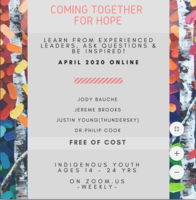
The Surrey Indigenous Youth Advisory Committee (FRAFCA) is collaborating with IICRD to host an online series called “Coming Together For Hope” throughout April 2020.
IICRD's Suzanne Williams and Cheyenne Stonechild are playing key roles to deliver "Access to Justice for Children 2020: Best Interests of the Child", hosted by the Co
Wrapping up the year, the International Institute for Child Rights and Development held its Annual General Meeting on November 25th, 2019 to share highlights, lessons and impacts from the
Sharing her personal and project journey, IICRD's Cheyenne Stonechild features the 4 the Generation project in the latest issue of Power Pages, a magazine reaching more than 2,000 youth and sercive providers in B
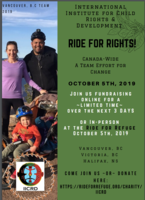
The International Institute for Child Rights and Development is gearing up with our friends and families across Canada to join Ride for Refuge on October 5, 2019. Please join us or contribute to our shared vision to bring child rights to life.
IICRD is playing an active role in the new International and Canadian Child Rights Partnership (ICCRP). The purpose of this partnership is to answer questions related to how children's participation in international and Canadian child protection programs and policies can be monitored.
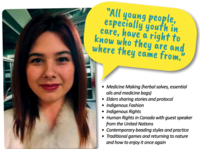
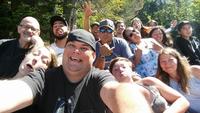
ARE YOU AN INDIGENOUS YOUTH FROM THE GREATER VANCOUVER AREA BETWEEN THE AGES OF 14 AND 23 YEARS AND LOOKING FOR A FUN AND MEANINGFUL WEEKEND WITH OTHER YOUNG PEOPLE?
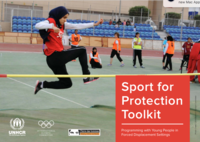
A new toolkit, Sport for Protection Toolkit: Programming with Young People in Forced Displacement Settings, focuses on advocating and engaging stakeholders to use the power of sport to strengthen the protection, development and empowerment of vulnerable children and
Wrapping up the year, the International Institute for Child Rights and Development held its Annual General Meeting in November to share highlights, lessons and impacts from the 2017-2018 fiscal year.
The International Institute for Child Rights and Development celebrates Universal Child Day and the anniversary of the United Nations Convention on the Rights of the Child (November 20th).
The International Institute for Child Rights and Development is gearing up with friends and family to join Ride for Refuge - a family-friendly cycling and walking event that helps to support charities that provide refuge and hope for some of the most vulnerable people on earth.
The International Institute for Child Rights and Development's Philip Cook (Executive Director) and Bill White (Former Chair) host a workshop on Tuesday, September 11, 2018 in San Francisco, California.
During our Annual General Meeting on Thursday, December 7th, the International Institute for Child Rights and Development presented its annual report (2016-2017), focused on the '
How can we use traditional Indigenous values as a holistic framework for youth programming & accountability?
A 3-day course for anyone working with First Nation, Inuit & Metis youth.
Dec 8-10th, 2017
Victoria BC
$500
YouLEAD Advisor, Mike McKenzie is featured in Step Up - Youth Voices in Focus: A crucial conversation about youth, disaster, and climate change adaptation.
The International Institute for Child Rights and Development played a prominent role in a special issue focused on the research and practice in the field of children and conflict.
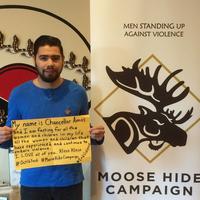
IICRD's Chancellor Amos is featured in Ha-Shilth-Sa - Canada's oldest First Nation paper. The article "EHATTESAHT MAN HOPES TO CREATE HIS OWN SUMMER JOB" was featured on April 12, 2017.
Cassandra Paynter, a University of Victoria student, created this digital story from her placement with the International Institute for Child Rights an
As a next step for IICRD YouLEAD training program, IICRD has applied for the new GAC sponsored INTERNATIONAL ABORIGINAL YOUTH INTERNSHIPS (IAYI) Initiative.
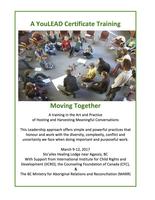
IICRD's YouLEAD program will be hosting an ART of HOSTING MEANINGFUL CONVERSATIONS training for YouthWorkers and Practitioners, from March 9th to 12th, 2017 at Sts’ailes Lhawathet Lalem (a renowned retreat facility near Agassiz). Being held by facilitators Pawa Haiyupis and David
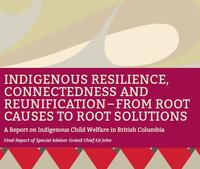
On November 21, 2016, a report was released that is fundamentally important for Indigenous child welfare in B.C., and that also connects with the IICRD mission to support dignity, belonging and justice for children and youth:
Here is an opportunity for advanced legal studies on Children's Rights, through the University of Leiden in the Netherlands (non-Dutch persons are invited to apply)
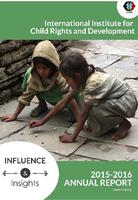
During our Annual General Meeting on December 6, the International Institute for Child Rights and Devopment presented its Annual Report focused on Influence and Insights from 2015-2016.
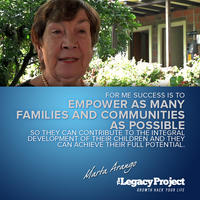
The International Institute for Child Rights and Development honours the life and legacy of Marta Arango who left this world in her home country of Colombia on November 25th – just months after her 80th birthday.
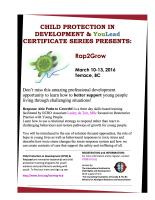
YouLEAD announces an exciting line up of learning calls and training certificates in 2016-2017. See the flyer for more details about dates, locations and how to join.
IICRD Associate Marie Wernham authored a UNICEF commissioned a 2016 report to explore the links and synergies between the Global Goals for Sustainable Development and the Convention on the Rights of the Child. This detailed,
IICRD Associate Ziba Vaghri is leading an international team to develop GlobalChild, an electronic platform that aims to have a standard of reporting for all countries on their compliance with the Unite
In the summer of 2016, Chancellor Amos and Sabrina Bonfonti joined the International Institute for Child Rights and Development as Co-Coordinators for the British Columbia YouLead project.
IICRD is looking for a BC Coordinator for our YouLEAD initiative. Please see the attached job posting, and for more info contact michele.cook@iicrd.org or info@iicrd.org. Thanks!
(deadline for application May 30 2016)
The International Institute for Child Rights and Development would like to congratulate several scholar-practitioners for receiving awards to improve the lives of children, including:
In February 2016, IICRD's Dr. Philip Cook uses participatory tools to engage sixteen graduate students at the University of Calgary to explore a module on child rights, child welfare and development.
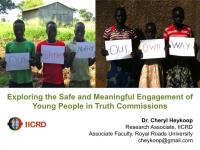
When wars and conflicts end, truth commissions are typically established to a historical and impartial record of the past. There is recognition in truth commissions that learning from young people about how they have been affected is important.
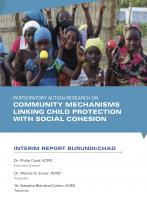
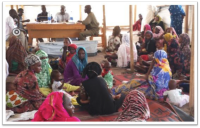
Philip Cook and Armel Oguniyi wrap up a four day training in Chad with ARED and Community stakeholders as part of a UNICEF funded initiative focusing on strengthening social cohesion and peace building through child protection.
Photo: Bill Beatty of Michele Cook, IICRD Capacity Director at the opening
IICRD participated in the opening of the photography exhibit by Tony Hoare on November 17th, 2015.
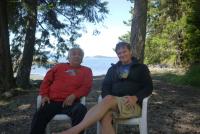
From our dear friend and mentor Bill White/Kasalid, on his recent experience bringing traditional Coast Salish teachings to Aboriginal Youth Workers from across Canada in the "Journey", a Child Protection in Development Certificate Course, from June 4-7, 2015 in the Salish Sea.
Every Thursday since 2012 I have gone to a community meal inside of the Grandview Calvary Baptist Church for approx. 50 low-income residence of that area. In order to get a meal (which includes a main dish, a salad, and a desert) you must help set up, help clean up, or pay $2.
In January 2011 I joined the Youth Advisory Committee with the Vancouver Aboriginal Child and Family Services Society to try to help improve foster care. We are a group of 12 youth between the ages of 16 and 24 who are currently or have been in foster care.
Today, the Access to Justice for Children Conference in Vancouver, BC, is being launched with a Roundtable discussion, co-hosted by Suzanne Williams and former British Columbia Supreme Court Justice Donna Martinson with key experts on justice issues involving children, to:
IICRD, in collaboration with the Child Protection in Crisis Learning Network, launched the 2015 webinar series:
Reaching the Most Vulnerable Children: Strategies for Strengthening Child Protection Systems
The Representative for Children and Youth has recently launched a new mobile app, Rep4Rights, to reach out to children and youth in their preferred channel.
"We are in need of courage and indignation on a global scale to ensure that the Convention on the Rights of the Child may start its second quarter of a century with renewed strength and vigor."
- Manuel Manrique Castro, IICRD associate
Young adolescent girls across the world do not see themselves as having rights or the power to make decisions about their own lives, according to a new global report. Meanwhile, a separate focus group conducted in Canada revealed Canadian girls have similar concerns.
As world leaders gather in New York this week, child rights experts and advocates are calling on all governments to strengthen the Convention by ratifying the Optional Protocol to the Convention on the Rights of the Child on a Communications Procedure – or OP3 for short.
The CREATE curriculum is designed to provide health workers in Ethiopia, Kenya, Tanzania and Uganda with a general introduction to children’s rights and their application to day to day work practice.
The Government of South Sudan formally renewed its commitment to the Action Plan signed in 2012 with the United Nations to end the recruitment and use of children in Government armed forces and other grave violations against children.
The 67th World Health Assembly adopts historic resolution "Strengthening the role of the health system in addressing violence, in particular against women and girls, and against children"
I now embark on a journey of improving my knowledge and skills in child protection. I join this forum/community with such intention and purpose and I pray I will have a beautiful story to tell and a successful journey to share.
A child lives in our area lost both her mother and father with HIV AIDS. Accordingly, she forced to live with her relatives. However, she faced unexpected challenges. Her relative tried to neglect her. She Slept alone and eat alone in separate materials.
New York—On April 28th 2014, during the Open Debate on Security Sector Reform, the United Nations Security Council voted unanimously to adopt resolution 2151. This resolution represents a growing trend to address the issue of child protection from a preventative angle.
The Office of the Special Representative on Violence against Children is developing a web tool for children to provide a platform for children to share and access resources for/by children about ending and preventing violence (a sort of ‘clearinghouse’ of resources).
Conflicts in the modern age are being fought less frequently between states, and more often within them. And with this shift, the use of children in combat has emerged as a striking trend.
Column by IICRD associate Manuel Manrique, published on February 12, 2014 by the daily newspaper El Mundo de Medellín (The World of Medellín - Colombia) Translated by Cynthia Selde.
Ottawa—On February 12th— International Day against the use of Child Soldiers — the Roméo Dallaire Child Soldiers Initiative introduced the second edition of “Child Soldiers: A Handbook for Security Sector Actors”. This handbook remains a first of its kind tool for security sector actors on the p
Children say they were confused by the warning signs and did not expect such big waves when Typhoon Haiyan lashed the Philippines three months ago, according to a new report by Save the Children.
the UNICEF Executive Board opened its first regular session of 2014 by drawing particular attention to the importance of child protection, a foundation for the fulfilment of all child rights outlined in the Convention on the Rights of the Child.
This is the first report on the situation of children and armed conflict in the Syrian Arab Republic submitted to the Security Council and its Working Group on Children and Armed Conflict.
What happens when the very same companies that provide life-saving drugs violate some children's rights to improve health care for others, or simply to increase the bottom line? As the pharmaceutical industry becomes increasingly globalised, it is ever more important to ask this question.
With brutality against children in the Central African Republic (CAR) reaching unprecedented levels as youngsters are maimed, killed and beheaded, and amid rampant sexual violence, the world community must use all the tools at its disposal to stop the conflict, the Security Council was warned tod
Working in child welfare in developing countries, or any country for that matter, isn't a particularly easy or simple task, in fact it's quite the opposite.
The Center for Universal Education at The Brookings Institution seeks to help build expertise on girls’ education policies and programs in developing countries.
This month, Carleton University launched the first Canadian Children's Rights Journal to coincide with National Child Day. The date marks the occasion when Canada adopted the United Nations Convention on the Rights of the Child (UNCRC), spelling out basic human rights for children and youth.
Last week, I reported that nearly 70 per cent of British Columbians would like to see government financial support for kids in foster care extended to at least age 21, according to a survey by the Vancouver Foundation.
A report highlighting the growing epidemic of violence against children in conflict with the law, and presenting a non-violent vision of juvenile justice.
January saw the launch of our monthly brownbag lunch series “Learning Lunches” at the offices of IICRD, with an hour long conversation on our recent experiences in the field for staff, associates and Board members.
Within the past eight months, over 52,000 unaccompanied minors have arrived at the Mexican-U.S. border seeking refuge in the United States, from Latin America’s “Northern Triangle”: Guatemala, El Salvador, and Honduras.
On March 15 and 16, 2014, we offered an introductory course in Strengthening Child Protection in Community: An Evidence-Based Approach to Child Protections Systems.
In the past 2 months, IICRD has initiated a collaborative discussion with the School of Governance at the Universidad de los Andes, in Bogota, Colombia.
On Feb, 17 2014, Dr. Cook, Dr. Vaghri and Dr. Bennet and UNICEF Thailand, hosted a 1 day Thai national forum on indicators for early childhood in Bangkok.
http://aeon.co/film/skateistan-kabul-skateboarding-afghanistan/
Skateistan, an inspirational documentary on the power of skateboarding as a means of supporting vulnerable boys and girls in Afghanistan
I read this article on today's BBC news and am impressed with Finland's simple solution to giving each child a good start, all in a box (that the child can even use as a crib)!
I have just completed a 4 day fascinating learning journey with Right to Play in Mali (working with national and regional partners) exploring monitoring and evaluation of child protection in the context of the recent conflict in Northern Mali, a report will be produced for RTP and a learning team
Check out this wonderful article from the Atlantic on changing social attitudes towards play and protection
http://www.theatlantic.com/features/archive/2014/03/hey-parents-leave-those-kids-alone/358631/
From May 5-8, IICRD, World Vision International and World Vision East Africa Regional Office (WV EARO) hosted 14 WV child protection practitioners from Ethiopia, Tanzania, Rwanda and Uganda.
Dr. Ziba Vaghri (UBC HELP), Dr. Sue Bennet (CEO, Ottawa) and Dr. Philip Cook presented at the annual Consensus in International Pediatrics Conference (CIP), Bangkok, Feb. 16, 2014.
Dr. Philip Cook, representing IICRD, has recently completed a 5 day visit to Colombia (Feb 5 - 8) to assist in developing national and municipal indicators for protection in early childhood (for children aged 0-6).
The Canadian Child Rights Academic Network (CRAN) met recently at the Landon Pearson Centre for Child Rights, Carleton University, Ottawa. The group of approximately 25 academics and NGO researchers convened to respond to youth perspectives on children's mental health (CRC Art's. 23, 24).
Philip Cook and Stuart Hart will be co-hosting the Global Reference Group on Accountability with the UN Committee on the Rights of the Child in Geneva, Jan 25-26, 2014. Other experts include: former Committee member Lothar Krapman, Dr.
Dr. Philip Cook presented an overview of IICRD and CPID, March 18 at the Doctoral residency. During the presentation he profiled the Circle or Rights approach using the Thai CPP program as a case study.
"Manifestly and palpably weak" leadership and a high turnover of directors are undermining efforts to improve children's services in England, says Ofsted's chief inspector, Sir Michael Wilshaw.
There are 20 local authorities rated as inadequate for protecting children.
NEW YORK – Around the world, young people have been making one-minute videos in UNICEF-hosted OneMinutesJr. workshops. Eager to express themselves, youth participants share their viewpoints on subjects such as disabilities, juvenile justice, violence, their future and their lives.
Many Syrian children are fleeing the war in their homeland without their families. UNICEF says more than 4,000 have crossed borders into neighbouring countries with no adult to look after them.
To see a short video on this issue, click here.
OTTAWA - The Harper government will not fund overseas projects that enable war rape victims and child brides to obtain abortions, International Development Minister Christian Paradis said Friday.
April and May brought Philip and I to East Africa for phase 2 of the TOC work and to support the ADP's in setting up their final evaluation of the Child Safe Spaces Project.
On a snowy January day 2014, Philip and I made a long overdue visit to Cranbrook to meet with Bart Knudsgaard and Eva Cole and other members of the Ktunaxa-Kinbasket Child & Family Services Society.
A wonderful weekend of learning and developing deeper connections and community as we explored IICRD's Approach to Child Protection Systems Strengthening.
An interesting article commenting on our current Systems from Micheal!
http://www.huffingtonpost.com/otto-scharmer/shifting-the-logic-of-col_b_8100068.html